
Where the cycle stands today
Bitcoin is currently navigating the latter stages of its four-year halving cycle, a period historically characterized by volatility before a eventual bottom. The market has moved past the immediate post-halving euphoria and is now grappling with macroeconomic headwinds and shifting institutional sentiment. This phase often tests investor patience, as the asset seeks a stable floor before the next major uptrend begins.
Technical analysis and historical patterns suggest that the current market structure aligns with the typical mid-to-late cycle correction. The price action reflects a struggle between long-term holders and short-term traders reacting to interest rate expectations and ETF flow dynamics. While the long-term trajectory remains bullish for many analysts, the short-term picture is clouded by uncertainty and downward pressure.
According to Fidelity, if historical 4-year cycles continue to hold true, the crypto market could bottom around November 2026. This timeline implies that we are still in a period of accumulation or distribution, rather than the start of a new bull run. Investors are advised to monitor key support levels and macroeconomic indicators that could accelerate or delay this bottoming process.
Broader market sentiment remains mixed, with some analysts pointing to potential further pain before the cycle bottoms. Valuations, money supply trends, and ETF purchase patterns are all critical factors to watch. The interplay between these elements will likely determine the timing and depth of the eventual cycle bottom, making it essential for investors to stay informed and avoid emotional decision-making during this volatile period.
Forecasting the 2026 price range
Bitcoin’s trajectory in 2026 sits at a crossroads between institutional accumulation and cyclical volatility. While the asset has established itself as a core holding for many portfolios, the specific price targets for the coming year diverge sharply depending on the model used. Some forecasts suggest a consolidation phase near current levels, while others project a breakout that challenges previous records.
The most bullish outlook comes from institutions like Bitcoin Suisse, which maintains that the secular bull market remains intact. Their 2026 outlook suggests Bitcoin could approach $180,000, driven by sustained ETF inflows and the maturation of the asset’s role in traditional finance. This view assumes that the post-halving supply shock will fully materialize without significant macroeconomic headwinds.
Conversely, more conservative models point to a potential dip before any sustained rally. Analysts at Changelly project a mid-cycle correction, with prices potentially dropping to a minimum in August 2026 before recovering to around $77,779 by the end of summer. This scenario reflects a more cautious approach, accounting for potential regulatory friction or broader economic slowdowns that could temporarily dampen investor sentiment.
Binance’s broader forecast blends these extremes, suggesting a gradual climb over the next four years rather than a single explosive event. Their model, based on fixed interest rates and consensus ratings, indicates that 2026 will be a year of steady growth rather than extreme volatility. This middle-ground perspective emphasizes the importance of long-term holding over short-term trading strategies.
The wide range of predictions—from sub-$80,000 corrections to $180,000 highs—highlights the uncertainty inherent in crypto markets. Investors should view these forecasts as scenarios rather than guarantees, adjusting their exposure based on their risk tolerance and investment horizon.
How spot bitcoin etfs are changing the market
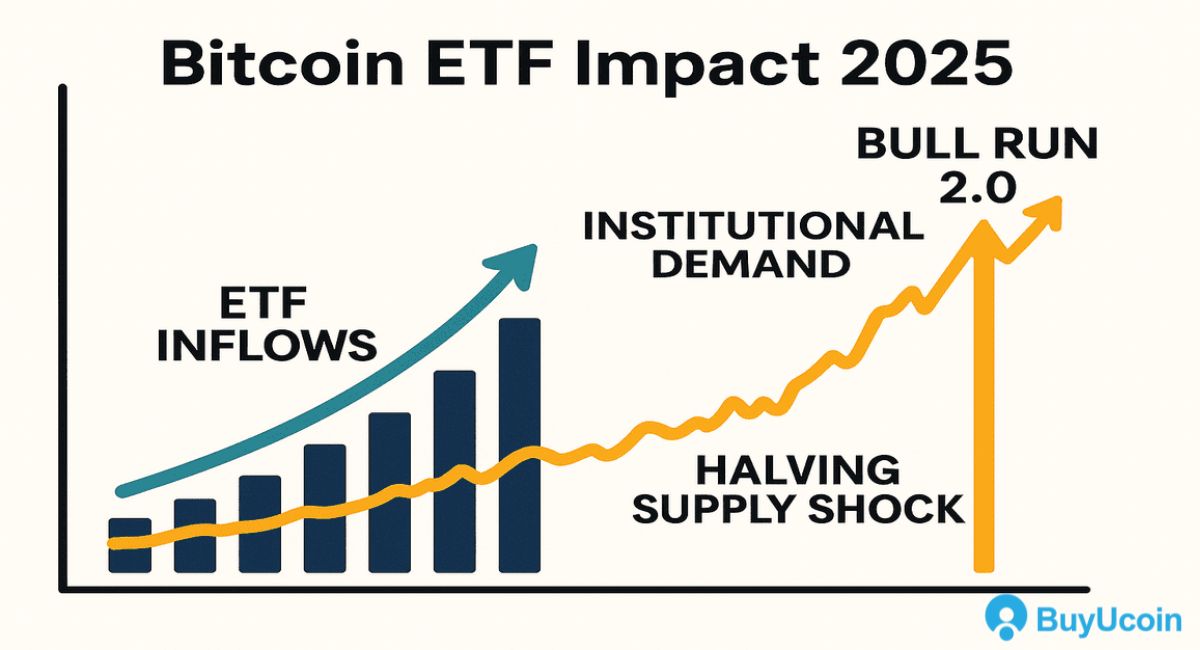
Spot bitcoin etfs have fundamentally altered the supply and demand dynamic for the 2026 outlook. Since their approval, these funds have created a persistent bid for bitcoin, absorbing a significant portion of daily mining output. This structural shift means that price discovery is no longer driven solely by retail traders on exchanges but by institutional capital flowing through regulated financial products.
The concentration of assets among a few major issuers highlights where institutional confidence lies. BlackRock and Fidelity currently dominate the landscape, acting as the primary gateways for traditional finance capital. Their dominance suggests that the market is consolidating around trusted, liquid vehicles rather than fragmenting across smaller competitors.
| Issuer | Fund Ticker | Approx. AUM | Expense Ratio |
|---|---|---|---|
| BlackRock | IBIT | $45B+ | 0.25% |
| Fidelity | FBTC | $30B+ | 0.25% |
| Ark Invest | ARKB | $1.5B+ | 0.21% |
| Bitwise | BITB | $1.2B+ | 0.20% |
This inflow of capital provides a buffer against the volatility typically seen in crypto cycles. As spot bitcoin etfs continue to attract net inflows, they reduce the available circulating supply on exchanges. This scarcity, combined with steady institutional demand, supports the argument that the 2026 cycle bottom is being fortified by stronger structural support than previous cycles.
Crypto assets to watch in 2026
As the Bitcoin cycle potentially bottoms around November 2026, investors are looking for ways to diversify beyond the primary asset. While Ethereum remains the standard for decentralized applications, the broader market offers distinct categories for risk-adjusted exposure. Focusing on infrastructure, stable yield, and real-world asset tokenization can provide balance during the transition from bear to bull markets.
Ethereum (ETH)
Ethereum continues to serve as the foundational layer for the majority of decentralized finance and non-fungible token activity. Its transition to proof-of-stake has reduced issuance, creating a deflationary pressure during high-usage periods. For investors, ETH offers a direct bet on the growth of the broader crypto ecosystem rather than just digital gold narratives.
Solana (SOL)
Solana has carved out a niche for high-throughput transactions, making it a preferred chain for retail-facing applications and meme coin trading. Its lower fees and faster settlement times appeal to users who find Ethereum’s base layer too expensive. However, this performance comes with higher volatility and occasional network congestion, requiring investors to monitor technical stability closely.
Maker (MKR)
Maker represents the leading protocol in decentralized stablecoin issuance, primarily through its DAI token. As the DeFi space matures, protocols that generate real yield from lending and treasury assets tend to outperform speculative tokens. MKR holders benefit from the protocol’s revenue share, offering a more fundamental value proposition compared to pure governance tokens.
Chainlink (LINK)
Blockchains cannot natively access off-chain data, making oracles like Chainlink essential infrastructure. As institutional adoption grows, the demand for reliable price feeds and verifiable data increases. LINK serves as a bridge between traditional finance and blockchain, positioning it as a critical utility token regardless of which specific application layer gains market share.
Hardware Wallets for Secure Storage
Regardless of which assets you choose, self-custody remains the safest method for long-term holding. Hardware wallets provide offline storage that protects against exchange hacks and phishing attacks. For those looking to secure their 2026 portfolio, investing in reputable hardware solutions is a necessary step before trading begins.


As an Amazon Associate, we may earn from qualifying purchases.
No comments yet. Be the first to share your thoughts!