The 2026 regulatory shift for digital assets
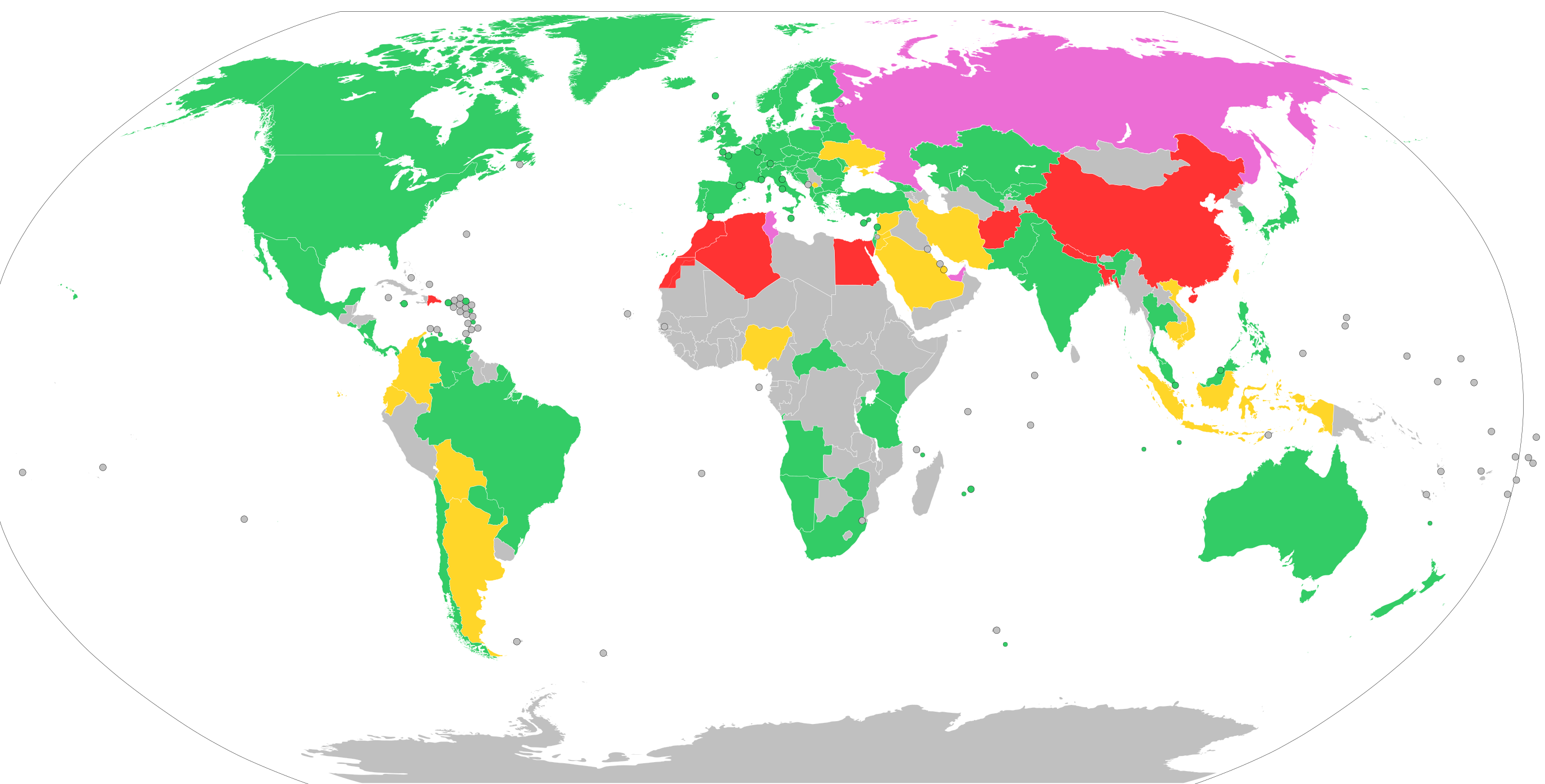
The era of legal ambiguity for Bitcoin is ending. In 2026, the regulatory landscape has shifted from fragmented warnings to defined federal and international frameworks. Governments are no longer asking if crypto belongs in the financial system, but how it fits within existing tax, securities, and banking laws.
This clarity comes from major legislative pushes in the United States and the European Union. The EU’s Markets in Crypto-Assets (MiCA) regulation is now fully operational, providing a unified rulebook for issuers and service providers across member states. In the US, the Financial Services and Markets Act 2023 remains the foundational reference for stablecoin oversight, with broader implementation expected throughout 2026. These frameworks remove the guesswork for institutional investors and retail buyers alike.
Global coordination is also tightening. Reports from PwC and Global Legal Insights highlight that 29 major jurisdictions have now codified specific definitions for digital assets, moving away from blanket bans toward structured compliance. This means Bitcoin is no longer a "grey area" asset but one with recognized legal standing, subject to clear rules on custody, reporting, and transaction monitoring.
For buyers, this shift means fewer risks of sudden, unannounced crackdowns. Regulatory clarity reduces the chance of exchanges being shut down without warning and provides legal recourse in case of fraud. The market is maturing, and with it, the legal protections for holding Bitcoin are becoming more robust.
How US securities laws now apply to Bitcoin
The regulatory landscape for Bitcoin shifted significantly in 2026 when the Securities and Exchange Commission (SEC) issued a formal clarification on the application of federal securities laws to digital assets. This guidance resolved a long-standing ambiguity by explicitly stating that Bitcoin itself is not a security. Instead, the SEC classified Bitcoin as a commodity, placing it under the primary jurisdiction of the Commodity Futures Trading Commission (CFTC) for spot market oversight, while the SEC retains authority over derivative products like Bitcoin ETFs and futures.
This distinction is critical for investors and institutions navigating the current regulatory environment. By confirming Bitcoin’s status as a commodity, the SEC removed the threat of enforcement actions based on securities violations for the asset itself. However, this clarification did not extend to all crypto-related activities. The SEC maintained that certain tokenized assets, staking services, and decentralized finance (DeFi) protocols may still fall under securities laws if they meet the criteria of an investment contract.
The 2026 clarification specifically addressed complex areas such as airdrops, protocol mining, and protocol staking. While Bitcoin’s underlying network operations are not considered securities offerings, the issuance or management of other digital tokens that promise profits from the efforts of others remains subject to SEC regulation. This bifurcated approach creates a clear boundary: Bitcoin operates as a commodity, while many other crypto assets and services remain under the scrutiny of securities regulators.
For market participants, this regulatory clarity reduces legal uncertainty for direct Bitcoin ownership and trading. It reinforces Bitcoin’s position as a distinct asset class separate from equity-like tokens. As the SEC continues to refine its stance on emerging crypto structures, understanding this commodity classification remains essential for compliance and investment strategy.
Global compliance standards for buyers
Use this section to make the Bitcoin Legal decision easier to compare in real life, not just on paper. Start with the reader's actual constraint, then separate must-have requirements from details that are merely nice to have. A practical choice should survive normal use, maintenance, timing, and budget. If a recommendation only works in an ideal situation, call that out plainly and give the reader a fallback path.
| Factor | What to check | Why it matters |
|---|---|---|
| Fit | Match the option to the primary use case. | A good deal still fails if it does not fit the job. |
| Condition | Verify age, wear, and service history. | Hidden condition issues erase upfront savings. |
| Cost | Compare purchase price with likely upkeep. | The cheapest option is not always the lowest-cost option. |
Safe platforms for compliant Bitcoin purchases
Finding a platform that meets the new 2026 regulatory standards requires checking for specific compliance markers. Look for platforms with clear KYC (Know Your Customer) and AML (Anti-Money Laundering) policies that align with your local jurisdiction. Major exchanges like Coinbase and Kraken have adjusted their operations to meet evolving global rules, offering a safer entry point for new buyers.
When choosing a platform, prioritize those with transparent fee structures and strong security protocols. Avoid platforms that operate in regulatory gray areas or lack clear licensing information. The Atlantic Council’s Cryptocurrency Regulation Tracker provides up-to-date information on which jurisdictions are enforcing new rules starting in 2026, helping you avoid non-compliant services.
Secure storage options
Once you purchase Bitcoin, moving it to a secure wallet is essential. Hardware wallets provide the highest level of security by keeping your private keys offline. For those looking to buy a hardware wallet, here are some reputable options available on Amazon:



As an Amazon Associate, we may earn from qualifying purchases.
Choosing a platform that integrates with these secure storage solutions can simplify the process of moving your Bitcoin off-exchange, ensuring your assets remain safe from potential platform vulnerabilities.
Verify legal compliance before you buy
Bitcoin legal status depends on where you live and how you store your assets. The global regulatory landscape is shifting rapidly, with new frameworks taking effect in major markets throughout 2026. Before you fund an account, run through this checklist to ensure your purchase method complies with current laws.
Check if your exchange is registered with the relevant financial authority. In the United States, look for FinCEN registration and state-level money transmitter licenses. The SEC has recently clarified how federal securities laws apply to crypto assets, particularly regarding staking and airdrops. If an exchange operates without clear licensing, avoid using it for significant holdings. Always verify the license number directly on the regulator’s official website rather than relying on the exchange’s marketing materials.

Choose a wallet that meets regulatory security requirements. For large amounts, a hardware wallet is often the safest option, keeping your private keys offline. If you use a software wallet, ensure it supports multi-signature verification. Avoid leaving large balances on exchanges, as these are more vulnerable to regulatory freezes or hacks. Verify that your wallet provider does not collect unnecessary personal data that could conflict with local privacy laws.
Understand how your country treats Bitcoin for tax purposes. Many jurisdictions now require reporting of every transaction, including trades and purchases. Some countries classify crypto as property, while others treat it as currency. Consult an official tax guide or a qualified professional to determine if you need to report gains, losses, or income from staking. Failure to report can result in significant penalties, so accurate record-keeping is essential.
Is crypto going to be regulated?
Yes. The short answer is yes. Governments worldwide are moving from reactive measures to structured oversight, with implementation expected by 2026.
The trajectory is clear: crypto is being integrated into existing financial frameworks rather than treated as an outlier. Recent legislation, such as the UK's Financial Services and Markets Act 2023, has already expanded oversight to include stablecoins and other digital assets.
This shift isn't about stifling innovation but about establishing clear rules for compliance, consumer protection, and market integrity. As noted in global legal analyses, 29 jurisdictions are now actively defining their stances on blockchain and cryptocurrency laws.
No comments yet. Be the first to share your thoughts!